Pages

Showing posts with label fiction. Show all posts

Wednesday, 10 February 2016

Between the Lines Series by Jodi Picoult and Samantha van Leer

Between the Lines perfectly captured the reasons behind my love of reading. I swear, the main character was me :P So I thought it would be appropriate to start this review a little differently, with a bunch of quotes that I absolutely loved.

My favourite passage came from the ending of Off the Page (the second novel). Here's a shortened version of it;


 “Everyone has a story. You might think it’s not worth telling, but then again, it’s a story no one has ever heard. What you do, what you say, how you carry the plot, just might leave a mark on someone. ..[Stories] help you escape, and they give you the chance to do things you never imagined you would or could…They are dreams for those who are still awake…Stories are all around us, caught in the throats of the strangers you walk past and scrawled on the pages of locked diaries..You’d best get going. Your reader is eagerly awaiting the next chapter”

Now for a bunch of other amazing and very inspiring quotes;

“I’d much rather pretend I’m somewhere else, and any time I open the pages of a book, that happens.” 

"When you have so many people, each one inevitably fascinating, why would you limit yourself to only those like you?...Instead of feeling as if I'm being judged by someone different from me, I learn from them."

“We could all be lucky. We could all be what we want to be, instead of who someone else told us to be.” 

“The act of reading is a partnership. The author builds a house, but the reader makes it a home.” 

“Well, you have to find that rare someone for whom you’re not putting on a show. Someone who shines a spotlight in your direction—not because you’re who they need you to be, or who they want you to be…just because you’re you.” 

“When she wanted to escape her life, she read books” 

 “At that moment, Oliver realized that home is not a place, but rather, the people who love you.” 

“How do you know that you are not part of a book? That someone's not reading your story right now?” 

Click to read more, for the real review...

Sunday, 7 February 2016

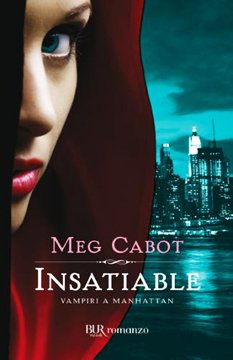
Insatiable by Meg Cabot


“We have to face difficulties to find out what our true strengths are. How we come back from a failure is a very valuable test.”Insatiable, Meg Cabot


Insatiable by Meg Cabot is a modern retelling of Dracula. Meena is a soap opera writer with a special gift – she can predict when and how someone is going to die. Although facing supernatural powers in her everyday life, she does not believe in the other supernatural beings – especially not Vampires! In fact she hates vampires. But when she meets the mysterious Lucien Antonescu, Romanian nobility, she may have to reconsider everything.

Did I like this book? Of course I did! It’s Meg Cabot for goodness’ sake! Mediator is one of my favourite book series, and I was eager to read another supernatural romance by Cabot. I think Cabot really has a talent. By the end of the book, I was rooting for Lucien and Meena to be together, even though, like Meena, I find the idea of vampires kind of repulsive. (I like to read about them, but I would not like them if they were real…) I mean, he bit Meena even after she specifically said, “No biting”. And after the meeting, I could see he loved her but at the same time he was a very violent creature and would mean trouble for Meena. Despite all of this, whilst I was reading I was upset with Meena for not just running away with Lucien. That is what some good writing does – gets you to go against your beliefs and fall in love with whatever the author wants.

Saturday, 23 January 2016

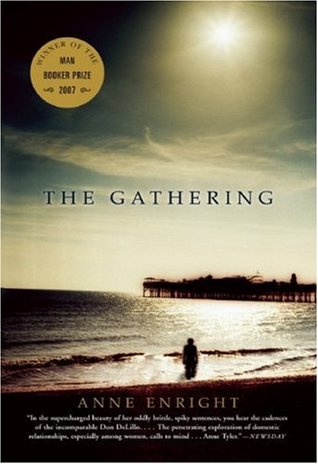
The Gathering by Anne Enright

'People do not change, they are merely revealed.' 


The Gathering is written in the perspective of Veronica, and she explains her family's stories and secrets. Her brother, Liam, died, and his funeral brings her large family together (Veronica is one of nine living children! I'm not sure how many there were originally). She talks about three different generations, starting with her grandma. 

It was written in an interesting way and I enjoyed reading it. It has a pessimistic tone, which left me feeling downhearted as I was reading it. To be frank, I was disappointed in the story. Since there were a few deaths, I was expecting a murder/detective novel. But alas, I was completely wrong. After finishing the book, I thought 'oh, is that all?'. It left me feeling that something was missing from the story. The idea of the story was interesting, but there could be more twists and surprises. It won the Man Booker Prize in 2007, so I might be the only one feeling this way. Don't get me wrong, it wasn't a bad book. But I think it wasn't my style. It was wonderfully written, but I was looking for a bit more action. 

Saturday, 7 November 2015

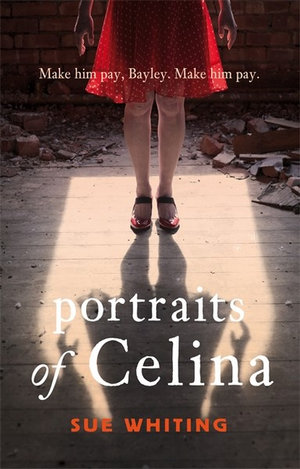
Portraits of Celina by Sue Whiting

“… but it seemed that the troubles of the past had strangely brought us a little closer together…”

Portraits of Celina by Sue Whiting tells the story of a broken family who move into an abandoned haunted house. The house had belonged to past members of their family, and had been the site where Celina, Bayley’s second cousin, had died. Bayley shares a striking resemblance to Celina. When Bayley starts to have visions of Celina’s old life, she thinks she is going crazy. Celina seeks revenge and Bayley must be the one to avenge her.

I am absolutely mesmerized by this book. It was so interesting and it had both cute teen romance and brooding mysteries. Full of plot twists, I could not put the book down. The result? Two hours later, and a finished book to write about. It is listed as part of the Premier’s Reading Challenge for years 7-9. But I think it may be interesting to even older grades.

Friday, 6 November 2015

iBoy by Kevin Brooks

“we’re all … animals - none of us know any better”

iBoy by Kevin Brooks is the story of a teenage boy who acquires ‘superpowers’. When someone throws an iPhone from the top of a 30 story building, Harvey’s head is cracked and the iPhone pieces get stuck inside his brain. Harvey is able to everything that a phone can do and much more. He seeks revenge on the gang members who hurt his childhood friend, Lucy. He becomes known as iBoy, a superhero protecting the violent local area. But in all of that, Harvey loses himself to iBoy as the line between good and bad starts to blur.

After reading How to be Invisible, I simply assumed that this would be another book for pre-teens. However, this book contains some heavy themes and should be read by younger adolescents. (Maybe 15 and up? It really just depends on maturity…)

Wednesday, 4 November 2015

How to be Invisible by Tim Lott


“Trust is invisible too, but it turns out that that it’s the invisible things that matter most of all”


How to be Invisible by Tim Lott is the story of a 13 year old science genius who, as per the title, learns how to turn invisible. Strato Nyman, just moved schools and was having a hard time fitting in. When he discovers how to be invisible, he finds out that no one is ever really ‘visible’. He learns a lot about his family, his friends, his bullies and even his teacher.  

I think I may be too old for this book. I kind of worked that out from the age of the protagonist. However, the title seemed so interesting, I decided to read it anyway. So, of course since I’m not the target audience, this review might be a bit harsh.

Sunday, 27 September 2015

A Corner of White by Jaclyn Moriarty

"You were like a piece of magic. You held the fixed stars in place for me and you stopped them from falling" 

A Corner of White by Jaclyn Moriarty follows the story of a girl from the World and a boy from the Kingdom of Cello. They live in different worlds, but are connected through a small crack- just wide enough to fit letters. They write to one another, and help each other with their problems. 

The funny thing is that I actually borrowed this book a few months ago, read a few pages, got tired of it, and returned it again. But I had forgotten I had already started reading this book, and just a few weeks ago, I borrowed it again. And I'm glad I gave the book a second chance. 

The beginning is quite slow (that's why I didn't finish reading it the first time), but the story gets increasingly better. Since part of the book is set in a magical Kingdom, I found it hard to understand everything that was going on. I think that Moriarty should've explained this Kingdom in more detail, and what the 'Colours' are. 

Tuesday, 15 September 2015

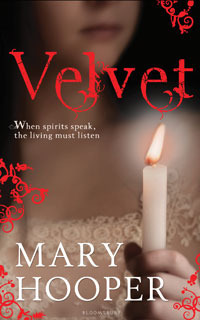
Velvet by Mary Hooper

“All at once it struck her that there were many degrees of evil in the world.”

Velvet by Mary Hooper is a historical fiction novel exploring the world of clairvoyants. The main character, Velvet is a young lady and an orphan. She works at the laundry in order to make ends meet. When something goes wrong and she thinks she is going to lose her job, the famous psychic, Madame Savoya, employs Velvet. Velvet becomes a sort of assistant and gets an inside look into how the world of mediums works. At first, she is completely mesmerized. However, as she learns more, she begins to realize that nothing and no one are really what they seem.

This is going to be another short review. This is because I find that with easier to read books I get so entranced by the story that it becomes hard for me to go back and analyse what I just read. What I can remember is that I loved the book. I read it in a few hours and wanted more!

Thursday, 10 September 2015

Almost Dead by Kaz Delaney


“…Well, you can’t have it both ways. You wanted a father, so you’ve got one.”


Almost Dead by Kaz Delaney follows the story of a Gold Coast elite high school girl, Macey Pentecost.  She is being visited by ghosts who need help to ‘move on’.  Although she doesn’t understand anything of the supernatural, she thinks she has it under control. That is, until she is visited by the ghost of ‘Nick’, who stubbornly refuses to admit he is dead.  He tries to warn Macey of danger, but even he doesn’t know what the danger is.  It all becomes more complicated as her father comes home with a surprise, Macey gets threats messages from a stalker and she starts developing feelings for Nick’s cousin.

Yesterday, my laptop stopped working and I took it as a ‘sign’ that I shouldn’t be doing homework :P I must say I am happy that my computer is crazy because I then found Almost Dead. The same day I finished it. It’s light, it’s cute and it’s romantic. Definitely different to the recent books I had been reading, and I was very glad to just relax for a bit. While it is very easy to read, it still has a very interesting plot. I was just a bit disappointed when I found out who the stalker was. Maybe it was just me, but I didn’t think we had enough mentions of the stalker. I had to quickly read back to remind myself who this person was. At least it was a surprise.

Friday, 14 August 2015

Everyday by David Levithan

“Every day I am someone else. I am myself-I know I am myself-but I am also someone else. It has always been like this.” 


Imagine waking up in a different body every day. A different room, a different family, a different life. Sounds crazy, right? This is the life of A (not from Pretty Little Liars!).  

Just from reading the blurb, I had high expectations. It's an interesting idea, and I was curious to see where the author took it. There are so many possibilities, and it had me asking so many questions. What is the reason for A waking up in a different body every day? What happens if A stays up past midnight? Can he/she stay in a body for more than a day? What happens to the person whose body he/she's in? 

Friday, 7 August 2015

Sister by Rosamund Lupton

“Grief is love turned into an eternal missing”  - Lupton

Do I even know how to access my blog anymore…? It’s definitely been way to long since the last time I read a book. I think that life can be explained just by looking at this blog – as time passed the less book reviews, not because I’ve grown lazy, but because I feel like I’ve lost the time to read. But with some of my tests over, I gave myself a quick break before I have to get back to my studies. Needless to say, I devoured two books in two days and will hopefully read another one today. Enough about me.

Rosamund Lupton’s Sister, is a thriller (well at least for my standards, as I am not really used to scary things) and almost detective fiction. It follows Beatrice’s journey as she looks for her missing sister. When the police end the case, Beatrice is unsatisfied with the verdict. It becomes all up to Beatrice to uncover the truth. She doesn’t just uncover the mystery but also learns about herself and her relationships.

Maybe it’s the fact that I hadn’t read a book for a long time, or that someone left this book on their fence for someone to take it for free or just simply because I always get to attached to novels, but I absolutely loved it! The language was simple and it was quite easy to read. The only hard part was figuring out when the settings switched - when Beatrice was talking to the detective or talking to her sister through the letter. But this form is perfect for the novel when you get to the end and learn the truth about this ‘letter’. I didn’t start reading expecting much but by the end I was screaming out loud at the plot twists.

Wednesday, 1 April 2015

Stasiland by Anna Funder

“Though it is the hardest thing, to work out one's weight and heft in the world, to whittle down all that I am and give it a value.” - Anna Funder
Stasiland is Australian Anna Funder’s literary journalism of Germany’s dark past.  In 1996, seven years after the reunification of Germany, Funder is working in television in West Berlin and grows interested in the occupants of the former German Democratic Republic. She explores the stories of the victims and perpetrators of the Stasi in East Germany. Anecdotes are drawn from people who answer to Funder’s newspaper advertisements and Funder’s own acquaintances. Miriam is the ‘tragic hero’ of the text. Funder sympathises with the 16-year-old who came to be considered an enemy of the state. Miriam tells the story of Charlie, her husband that was killed in custody. Miriam’s story is interwoven with the stories of Julia and Frau Paul. Julia is Funder’s land lady, although reluctant about telling her story, shares the details of how her family went through “internal emigration”. Julia was ostracized because of her Italian boyfriend even though she had no intentions to go against the state. Frau Paul shares her story of how her sick baby was taken to West Berlin for treatment and because of her attempts to visit her son she becomes embroiled with a group helping people leave East Berlin. These sad stories are mixed with the stories of the perpetrators, the people who worked with or helped the Nazi, including Herr Winz, Hagen Koch, Karl E. Schnitzler and Herr Bock. Many of these men think back to the GDR with nostalgia and little to none remorse. Funder’s story is a personal and passionate exploration of Germany’s Stasi epoch.

I really enjoyed Stasiland, and I don’t often read non-fiction. Funder’s literary journalism style may not be conventional or the most factual but I found that it is creates a very interesting way to read non-fiction. I could empathise with these real life characters and it added a breath of fresh air into a topic that is now often seen only through the details of school textbooks.

Friday, 12 September 2014

Atlas Shrugged by Ayn Rand

“I started my life with a single absolute: that the world was mine to shape in the image of my highest values and never to be given up to a lesser standard, no matter how long or hard the struggle.” 

“If you don't know, the thing to do is not to get scared, but to learn.” 

“It is not death that we wish to avoid, but life that we wish to live.” 

Atlas Shrugged by Ayn Rand is the story of the creative minds, the hard workers, the inventors protesting against the corrupt government and society. It is mostly told through Dagny Taggart’s (a railroad executive) point of view. She struggles to follow her moral code and love for her industry while having to sacrifice everything for a society/government that judges her as amoral; taking advantage of her virtues. John Galt becomes the symbol of everything she hates, but mostly everything she loves. Dagny finds a broken down motor which runs on static electricity, as she tries to find the inventor and his reasons for abandoning the motor she begins to find a whole new world and philosophy. Dagny is reluctant to give up her railroad but she begins to see that she is only helping the looters.

As you should be able to tell by my use of three quotes, I really liked the book and what it had to say. I had previously read, We the Living, and I had really enjoyed it so I decided to read another of Rand’s book. I must say, I have found that I really agree with Rand’s philosophy. There were a lot of teachers that did not support me reading this book, they thought it would ‘brainwash’ me; too extremist. I don’t think these teachers had completely read the book, because too me it wasn't just about being rich and selfish. Sure, it justified capitalism and some things were exaggerated; however, it talked about hard work, about only giving and taking what is deserved and about money being important but only the tool and not the means or the end.

Saturday, 2 August 2014

Tess of the d'Urbervilles by Thomas Hardy

“If an offense come out of the truth, better is it that the offense comes than that the truth be concealed.”  - Tess of the d’Urbervilles

Tess of the d’Urbervilles by Thomas Hardy is set in a small country town in Wessex, at the end of the 19th Century. The Durbeyfields discover they are the descendants of a forgotten noble family – the d’Urbervilles. When the family experiences financial hardship they send their eldest daughter to ask for help from their “kin” (a family that bought the name of d’Urberville). Tess meets Alec d’Urberville her (fake) cousin. While Tess is working for Alec’s mother, he rapes her. The rest of the story is about the struggles Tess faces as a victim of rape in a society that blamed her for her own predicament. Even her mother blamed her for not marrying Alec.

Is this a good book? Yes and no. I didn’t like it; in fact I quite detested it. I didn’t like the ending of the story and I certainly didn’t like the characters, not even Tess. However, if Hardy’s purpose in writing was to draw emotions, even if they are negative, if his purpose was to start a debate on feminist issues then he did a good job with his book. Personally, I like the idea of books as escapism and of stories with happy endings. I did not achieve this with Tess of d’Urbervilles, but I did go on an emotional roller coaster ride as I had heated discussions with all of the characters at one point or another.

Wednesday, 14 May 2014

Poor Man's Wealth by Rod Usher


"Tourism is too loud for my liking. And it blinds some people . . . Tourism in the end is stare and click, fluids in, fluids out. It makes visitor no longer your guests."

Poor Man's Wealth by Rod Usher is the tale of a sleepy, Spanish-speaking town as told by the mayor, El Gordo. Their main source of income is the tobacco crop. However, as people become more aware of the health consequences, the town begins to slowly die and the town must look into new places for their money. El Gordo has the idea of forming a committee to create a 'hoax' or town legend to attract tourists. 

Gentle - that is the word I'd use to describe the novel, Poor Man's Wealth. I enjoyed reading it, it wasn't too short or long, and it had an interesting idea. But, there wasn't any shocking twists or tense moments - it didn't capture my heart. The book seemed to go on a smooth ride and while Usher added some twists to the story, the characters reacted to them in such a calm manner that I never became anxious about it. In a sense, this created the atmosphere of the town. While reading, I felt I was transported to the sleepy town of Higot and even to the past (as the townsfolk still led old-fashioned lives). Usher was successful in depicting the scenery and creating his world, but as for the story, it wasn't very captivating. 

Thursday, 24 April 2014

Witch & Wizard : The Gift by James Patterson and Ned Rust

“Knowledge is valuable, but imagination is invaluable.” – James Patterson

 Witch & Wizard by James Patterson is a fantasy series that depicts the persecution of two magical siblings by the new totalitarian government, ‘New Order’. The Gift is the second instalment and it follows Whit and Wisty Allgood as they figure out how to better control and use their magic while trying to save everyone endangered – their parents, Whit’s girlfriend and all the brainwashed children. Meanwhile, the tyrannical leader is on the hunt for the Allgood siblings in order to take their gifts and be able to control everything and everyone.

I received this book as a gift and I’ve really enjoyed reading it. I can’t wait to read the next book, to figure out all the cryptic clues. However, I do feel that The Gift went in a circle; I don’t really know more than I what I got from the first few pages. It seemed that Patterson was trying too hard to extend the plot so that it could become a lengthy series; at one point, the plot became Whit and Wisty running away, then getting caught by the villain then escaping then getting caught – and it just wasn’t going anywhere! Really, none of the answers proposed at the beginning were answered. Maybe, this was because I skipped the first book and went straight into the second; the lack of background information could have hindered my immersion into the story. However, I don’t think this was too big of a problem as I didn’t even realise this was the second book until I started writing this post. Patterson managed to catch all the readers up to the full story quite easily, as there were so many references to the past, which I’m assuming mostly happened in the first book.

Friday, 28 February 2014

Mrs. Dalloway by Virginia Woolf


"This late age of the world's experience had bred in them all, all men and women, a well of tears" 


Mrs. Dalloway by Virginia Woolf is written in a stream-of-consciousness form; as were many modernist literature. The story is set in only one day, as Clarissa Dalloway organizes a party. The story reveals her thoughts and ideas. It also explores the interwoven stories of Dalloway's friends and husband. The story is told in parallel with a War Veteran suffering from post traumatic stress disorder. Even though the veteran is quite disillusioned he shares Clarissa's feeling of oppression by society. 

Personally, I did not enjoy this book as much as I had hoped to. This is due to my own dislike of the usual modernist style. I much prefer structure and a full narrative. However, I do enjoy analyzing and breaking apart this style of story. The more you analyse the more little 'tricks' and ideas of life and society that were so subtly criticized/analysed are discovered.

Saturday, 25 January 2014

Paladin by Dave Luckett

“Good if they were good, but they weren't always good... Power goes to most people’s head, you know.” (p. 27)

Paladin by Dave Luckett is the exploration of truth and justice by placing the protagonists into fantasy second dimension/world. Sam and Finny live as outcasts in their city, until they find out that they belong to another world. Both Sam and Finny have magical talents that are needed in to fight evil in another land.

Firstly, the novel was a pleasant short read but it wasn't a great book. Paladin isn't bad but it isn't very good either, it’s just mediocre. While, I enjoyed the hour or two it took me to read I wouldn't recommend this book, simply because there are other fantasy novels that are better. The main reasons for this were that it was very brief and unoriginal. However, there were some nice themes investigated.

Friday, 17 January 2014

Little Dorrit by Charles Dickens


“You will profit by failure, and will avoid it another time. I have done a similar thing myself, in construction, often. Every failure teaches a man something, if he will learn.”


Little Dorrit by Charles Dickens is the tale of the intertwining lives of 19th Century British families, from different social and economic statuses. Little Dorrit was born and raised in the Marshalsea debtors’ prison. She meets Mr. Clennam, who had just returned from his travels abroad, after his father died and left a mysterious watch for Mrs. Clennam. After seeing his mother being unusually nice to Little Dorrit he begins to suspect that his mother, the watch and Little Dorrit are all connected. He also suspects that his mother had taken some part in the financial state of the Dorrits. Mr. Clennam, with the help of friends and high powered connections investigate this case. What we find out in the end is a bigger twist to the story than Mr. Clennam ever suspected when he began to investigate.

Like many 19th Century, English classics, Little Dorrit is a humongous text that explores the unfair working of society, the gap in the upper and lower classes and especially, the obsession people have with money. I found this book was sometimes very confusing and at other times very intriguing. The start was very long and it only became to be interesting only a third of the way in, mostly because it was when I started to understand the story – others more proficient in classic literature may completely disagree with me. What I found the hardest to follow were all the jumps from each family every few chapters. However, I didn’t worry about this too much because I had already learnt from Les Miserables by Victor Hugo, which followed the same style. And as expected, the confusion all pays off when all the characters come together to form part of just one story.
Warning: This is a somewhat lengthy review  of the ideas on the book and it contains  some spoilers.

Wednesday, 3 July 2013

The Dead of the Night by John Marsden

In The Dead of the Night, Ellie and her five friends decide to go back to Wirrawee to see if Corrie and Kevin are fine and try to get more information about the Showground. After sharing what they found out they decide to go to see what's on the other side of Hell and hopefully find  more people. 

This is the second book in the Tomorrow series. It's more violent and more adventurous than the first. They kill more soldiers and there are more attacks. Because of this, Ellie feels guilty and feels 'shadows' following her. 'I live in the light, but carry my dark with me' is how she describes what she is feeling. The group continuously change from young and naive teenagers to more experienced and strategic people. They are more careful and aware of the situation that they are in. They are already giving each other advise on how to keep calm when they are attacking and aren't as clueless as they were in the start of the first book. 'When you're scared you can either give in to the panic and let your mind fall apart, or you can take charge of your mind and think brave.'