Pages

Showing posts with label classic. Show all posts

Thursday, 1 January 2015

An Artist of the Floating World by Kazuo Ishiguro

“A man who aspires to rise above the mediocre, to be something more than the ordinary, surely deserves admiration, even if he fails and loses a fortune on account of his ambitions . . . if one has failed only where others have not had the courage or will to try . . .  to be gained from his observation when looking back over one's life."

Kazuo Ishiguro's An Artist of the Floating World, follows the story of Masuji Ono, a propagandist artist for Japan Imperialism during the war. Following Japan’s defeat in the war, Ono becomes a discredited figure; his daughter, evermore influenced by her husband, criticizes her father for his past. To make it worst, Ono’s wife and son were killed and his youngest daughter was in her mid 20s and having trouble finding a husband. Ishiguro manages to provide a peek into post-war Japan and how the paradigms were shifting. The old tradition and ideas had to adapt to the new way of life, one that closely followed the USA. Ono is caught between worlds; he is ‘an artist of the floating world’.

This story is short, flowing and presents an interesting view, there is no reason why anybody shouldn't take a few hours (or less) to read Ishiguro’s, ‘An Artist of the Floating World’. The whole story is told in Ono’s point of view, I found this quite different as many novels don’t place an old retired man as the protagonist of the book. However, I found this technique captured perfectly the hypocritical state and the imbalanced state that Japan was left during the war. Ono had been considered a very patriotic Japanese. Now, he still had pride, he did what he believed was right and he was a well-known artists, however, he being forced to change his views and his whole history in order to be a ‘loyal’ Japanese. Ono’s mind quite often strayed and spoke about different ideas, but I think that he was, inherent to Japanese culture, very structured and the novel never became a stream of consciousness. At times, I did get lost as there were so many names and so many really similar names – I found it more confusing when Ono’s story would stray for five pages and he would suddenly remind himself to get back to the story. However, this way we are taken into the mind of the retired man, he has a lot of time to reminisce and he lives in a very tranquil state of mind even with everything going around him.

Monday, 22 September 2014

Brave New World by Aldous Huxley

“One believes things because one has been conditioned to believe them.”

Brave New World by Aldous Huxley reminds me of a more disturbing and extreme version of 1984. The 20th Century novel is set in London in 2540 (in the book, known as 632 after Ford).  The world is stable; nobody ever suffers, the world is united, the people are happy and everyone is in a job that is satisfactory to them. However, this means controlling everything; the world has a stable population of 2 billion, children are ‘manufactured’ in labs, genetically modified to fit a caste and then educated – almost traumatized/terrorized – to fit into society. The lower castes (the majority of the population) are bred through a process in which one single egg produces up to 96 identical children. When Bernard and Lenina travel to the “Savage Reservation”, they are shocked at the difference between the two worlds. They end up encountering, John, a young man that was born from World State parents but born and raised in the Savage World. John is an outsider due to his appearance in the primitive village, and finds comfort in reading Shakespeare. Bernard decides to take John and his mother back to London. However, John finds the ‘civilized’ society appalling and is still feels as the outsider...

Sunday, 20 April 2014

1984 by George Orwell


“Perhaps one did not want to be loved so much as to be understood.” 


1984 by George Orwell is a science fiction story that attacks totalitarianism. The book is set in the superstate of Oceania, in the province called Airstrip One. Everything and everyone from the party is monitored all the time by Big Brother, the supreme leader. Anyone who shows any sign of rebelling against IngSoc (the government) is punished, tortured until they confess to all sorts of crimes and then killed. Winston, the protagonist, works in the Ministry of Truth. His jobs are to falsify records. Smith inwardly rebels and finds that there are others like him. However, the Party can see everything and so Winston is not as successful as he thinks and is ultimately betrayed by his co-worker in the end.

Should you read this book? Definitely! Not only is this book a classic and references to it all the time in media, pop culture and everyday life but it is surprisingly entertaining and easy to read. From the beginning, I understood everything and I was actually invested in the story, I say ‘actually’ because the classic novels are not always so accessible to modern teen readers and this was an exception. Although, I have to warn any future readers, that the ending is not a happy one and while this was necessary to prove Orwell’s point, I am never one to be satisfied with a sad ending.

George Orwell uses the novel to warn the readers of that time about communism and totalitarianism in general. George Orwell sets the story in 1984 - only 35 years after the publication date – so to warn the English public that this could easily happen to them if they didn’t ward off totalitarianism. The Cold War at that time had not escalated yet and so there were still some academic supporters. As Orwell put it, “Every line of serious work that I have written since 1936 has been written directly or indirectly against totalitarianism and for Democratic Socialism as I understand it." Orwell was against the communist up rise in Russia and Spain and so sought to warn the British and Americans of this. Personally, I agree with Ben Pimlott’s introduction (Penguin publication) which stated that this book was also an attack on the direction of the British Labour government, at that time, into state socialism. Orwell may have been a democratic socialist but I don’t think he was pleased with the direction the Labour government was heading in. Mostly, because the name of the government in 1984 was IngSoc, meaning English Socialism in Newspeak. This meant that England/Britain was still the power house of Oceania; it wasn’t another country such as a Russia who had taken over England and turned it communist. [NOTE: Going back now, I really think George Orwell wrote about Totalitarian Russia. As I am studying Russia in Stalin's period, I see more and more similarities about the past Russia and 1984 - it is really shocking. Things like the no persons, trials for people who used to be part of the party and even thought crime occurred in Russia.] 

Friday, 17 January 2014

Little Dorrit by Charles Dickens


“You will profit by failure, and will avoid it another time. I have done a similar thing myself, in construction, often. Every failure teaches a man something, if he will learn.”


Little Dorrit by Charles Dickens is the tale of the intertwining lives of 19th Century British families, from different social and economic statuses. Little Dorrit was born and raised in the Marshalsea debtors’ prison. She meets Mr. Clennam, who had just returned from his travels abroad, after his father died and left a mysterious watch for Mrs. Clennam. After seeing his mother being unusually nice to Little Dorrit he begins to suspect that his mother, the watch and Little Dorrit are all connected. He also suspects that his mother had taken some part in the financial state of the Dorrits. Mr. Clennam, with the help of friends and high powered connections investigate this case. What we find out in the end is a bigger twist to the story than Mr. Clennam ever suspected when he began to investigate.

Like many 19th Century, English classics, Little Dorrit is a humongous text that explores the unfair working of society, the gap in the upper and lower classes and especially, the obsession people have with money. I found this book was sometimes very confusing and at other times very intriguing. The start was very long and it only became to be interesting only a third of the way in, mostly because it was when I started to understand the story – others more proficient in classic literature may completely disagree with me. What I found the hardest to follow were all the jumps from each family every few chapters. However, I didn’t worry about this too much because I had already learnt from Les Miserables by Victor Hugo, which followed the same style. And as expected, the confusion all pays off when all the characters come together to form part of just one story.
Warning: This is a somewhat lengthy review  of the ideas on the book and it contains  some spoilers.

Friday, 17 May 2013

The Great Gatsby by F. Scott Fitzgerald


“The loneliest moment in someone’s life is when they are watching their whole world fall apart, and all they can do is stare blankly.”The Great Gatsby by F. Scott Fitzgerald is a classic American novel. The story is told by Nick as he shares his point on view of the people around him and of course, about the mystifying Gatsby. Gatsby, like the country, is young. Gatsby’s past mysterious, his stories don’t match up and the reasons he has done everything so far is unclear. Nick uncovers the truth, or at least what we think is the truth, of the man.I guess if you are reading this you want to know if it is a good book to read. Before I start discussing the novel and analyzing it, I will start by answering this. I have heard many people who have enjoyed this book, it is even being made into a movie but I wouldn’t recommend it to anyone.

Friday, 19 April 2013

Persuasion by Jane Austen


“How quick come the reasons for approving what we like.”  - Jane Austen,


Persuasion by Jane Austen is the story of Anne Elliot; a witty, independent and intelligent woman of the upper class in the 19th Century. Eight years before the start of the novel, Anne was still a young woman when she fell in love with Officer Frederick Wentworth. However, she was persuaded against this love. Now, in the present she is already 27 and much wiser. She meets again with now, Captain Frederick. This is not only their love story but also the satire of society’s vanity and social class.

At the start I found the book quite hard, I thought that I would actually be writing this review differently and saying that I didn't think this was a book for my level and age, mid-teens. The words were quite hard, like any other classic and the names sometimes got me confused, especially the two Charles and it didn't help they were cousins. However, once the story started taking shape the whole thing became easier to read and follow. 

I quite enjoyed this book, but I do have one comment that to me seems to correlate with Jane Austen’s literary work; I find that Austen writes books that if they were written nowadays they would have been considered ‘teen fiction’ with a bit of romance. It may be because I am used to the thrill of fantasy novels but I found that Persuasion didn’t have a very strong plot. As I said, I enjoyed reading the novel however, as I go over the story I don’t know how the story took over so many pages. It was basically the day to day life of Anne Elliot and her seeing Captain Wentworth again. There were little complications, like there would be in real life but nothing major. I read in the trusty J sparknotes that the climax was when Wentworth gave Anne the letter announcing that he still loved her.  However, this scene was one of the last in the books, were all the other 150 or 200 pages just the introduction and a very small build-up?

Saturday, 6 April 2013

Frankenstein by Mary Shelley


“Beware; for I am fearless, and therefore powerful.”  - From the novel, Frankenstein


Frankenstein by Mary Shelley is Gothic genre book written in the 1818. Victor Frankenstein is an university student whose ambitions and passion for the science leads him to create something no one has ever deemed possible, he created life using dead humans' body parts. However, as soon as he finishes his project he realises the mistake.To him, the monster is vile and gruesome. The story is told through the letters of Captain Robert Walton, who found Frankenstein nearly at a state of emaciation. His letter not only incorporates Victor's story telling but Victor's own letter and even the monster's side of the story as he tells it to Victor who then tells it to Walton. 

How do I begin..

The novel was completely different to what I imagined and it gets me so frustrated that the movies are so different to the book. I don't think Mary Shelley would have been too happy with the movies made of Frankenstein  not only because they are so different but because they lose the themes and morals. There are various movies that came out on Frankenstein but most of them have the Creature as some sort of complete monster who can't talk at all other than grunts. In the book Frankenstein was so eloquent and always gave an explanation as to why he became the way he was. In one of the movies the Monster was bad tempered was because the brain used was a criminal's brain, however in the book the Monster killed people because of the injustice that he suffered because of his appearance. Also, they even changed the name of Victor Frankenstein to Henry and made the character lose the feeling of isolation. In one of the movies there are sequels (eg. Frankenstein's Bride) but in the book Frankenstein died... I mean, I know movies are usually a bit different to books so that it flows more and scenes are changed so that emotions and reasoning are depicted visually rather than worded out but this is just ridiculous.  

Saturday, 16 March 2013

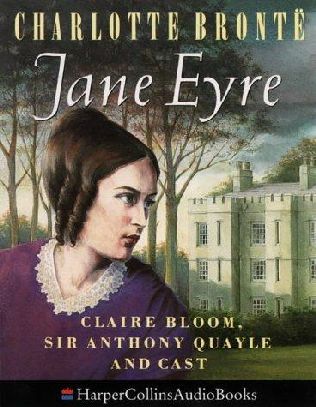
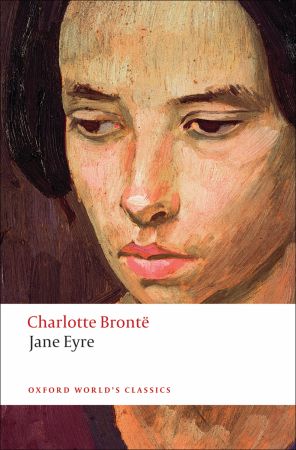
Jane Eyre by Charlotte Brontë


“The soul, fortunately, has an interpreter - often an unconscious but still a faithful interpreter - in the eye.” 

Jane Eyre by Charlotte Brontë is a gothic romance novel that has become a classic. It is the story of Jane Eyre a strong, fierce, passionate, educated, god-righteous woman as seen by her eyes. Jane was an orphan, she was sent to a boarding school for the destitute when she was 10 by her neglecting aunt. There, she received quite a good education and found a teacher that really inspired her. Jane always wanted to travel and discover the world so after completing her schooling and teaching there for two years, she becomes a governess to a rich family with a mysterious master. The story is her struggle in finding the balance between the morally right thing and her own passions, between being obedient but independent and free-willed. Jane critiques the social class division however sticks to it and believes in it all through her life.

Charlotte Brontë made my thoughts on old novels change. Through Jane Eyre I found that there can be classic that I become absolutely enthralled. Sure, it still had some of the conventional language found in older and gothic books: long paragraphs describing something that appears to be insignificant (I’ll confess that sometimes I end up skipping a line or two when it is too descriptive) and the complete opposite, when a scene changes without notice that you are left to wonder what is going on.

I think that Brontë used Jane Eyre to explore concepts of social hierarchy and if status and behaviour is innate. However, she did not use the protagonist to challenge these concepts but rather, through her writing, gave the readers a ‘challenge’ to ponder for themselves in this issue. Jane Eyre was a strong, independent woman however she never saw herself as an equal.

Sunday, 21 October 2012

Rebecca by Daphne du Maurier

“Happiness is not a possession to be prized, it is a quality of thought, a state of mind.” - Rebecca

Rebecca by Daphne du Maurier is a classic gothic novel. It follows a young woman (not named) who marries a wealthy man widow, Maxim de Winter. She moves to his house in Manderley and finds it very hard to fit in. She thinks everyone is judging and comparing her to Rebecca. All the things in the house are Rebecca's and everywhere she goes she knows Rebecca would have done it. Worst of all Maxim is getting more and more distant and she believes that he was never really in love with her but he still loves Rebecca. It seems that even the dead can win.

I will go straight to the point; I didn't like this book. I really don't get why this has become such a famous literature. It may be that I am still too young to fully comprehend the whole story of Rebecca, but I just found it wasn't as mysterious or as captivating as a gothic book should be. 

Monday, 24 September 2012

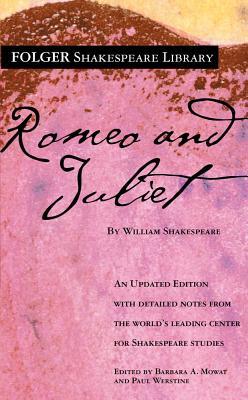
Romeo and Juliet by William Shakespeare

"What's in a name? That which we call a rose by any other name would smell as sweet" - Romeo and Juliet 2.2
Romeo and Juliet by Shakespeare is one of the most well known plays (so I'll keep the summary short). Two adolescents from rival families fall in love. Their love is forbidden so they  get married undercover. Romeo, albeit trying to keep the peace, ends up killing Juliet's cousin and gets banished from Verona. The friar helps Juliet to reunite with Romeo. He gives Juliet a potion that will make her seem dead, then  after her funeral she will wake up and they will be able to elope. The plan goes wrong when the messenger is detained in one of the cities because of fear of spreading the plague and Romeo arrives where Juliet lies and kills himself. Juliet wakes up and and seeing Romeo kills herself. 


First of all I apologize at the beginning if I end up just calling Romeo and Juliet a novel instead of a play, it is quite a habit I need to get out of; it is hard since I'm used a play being what I watch and a novel is what I read. This review could easily be one of the longest I write because of the in depth study I did in class on the play. There are so many themes and ideas explored in the play. It isn't just about love but also about hate and how it achieves nothing, it is about people leading lives through emotions instead of reason, adolescent rebellion, the law judging and restoring peace and so much more. Shakespeare's language is also highly regarded, throughout most of his play he uses the iambic pentameter, poetry and uses rhyme to highlight importance of the dialogue. It would be easy to write  pages on the topics I just mentioned however this is what everyone will study in school or read on the internet and I'm taking a different spin on this review

Monday, 10 September 2012

Peter Pan by J.M. Barrie

“Never say goodbye because goodbye means going away and going away means forgetting.” 

Peter Pan by J.M. Barrie is a well known classical book. All children grow up but one, Peter Pan. Peter lives in the Neverland. One day, in one of his trips to hear stories told in the Darling's house he gets caught and loses his shadow. When he returns to get back his shadow, Wendy is awoken by the sounds of Peter crying. Wendy helped Peter sow on his shadow and Peter realising the importance of a mother figure asks her to go with him and be his mother and mother to the lost boys. Wendy and her two brothers were very excited and with a bit of fairy dust they fly their way to the Neverland. 

In the version of the book I read there were two stories; Peter in Kensington Gardens and Peter and Wendy. This book was one of the most confusing books. I had watched the movie and cartoon versions of Peter Pan and so I was expecting something similar. However, when I first start reading the narrators are the Davies brothers and they talk about things like baby castle where the most sought up baby lives by herself and all these baby attractions in the kensington gardens, it felt like I was reading the wrong book. Finally when I read the name Peter Pan I was relieved, but not for long. Peter Pan was completely different to what I was expecting. Firstly he was only a week old, he wore no clothes, he rode a goat, he lived with the birds because everyone was a bird who flew to their parents' home and there turned into humans.

Sunday, 10 June 2012

To Kill a Mockingbird by Harper Lee


"Mockingbirds don't do one thing but make music for us to enjoy... but sing their hearts out for us. That's why it's a sin to kill a mockingbird." 


To Kill a Mockingbird by Harper Lee is a classic book. It is told by Scout as she looks back at her childhood, during the great depression in a Southern town of the USA. The second part follows the story of the court case of Tom Robinson and how he is judged unfairly because of his skin colour.

At the time of release this book was controversial; bashed by some and praised by others. Even now it is still  banned in some U.S states. Nevertheless it is now a classic and with the title of classic comes words such as 'ancient', 'educative'and probably 'boring'. To me, it was no exception. I was told to read for school. I was handed an old looking book and listened with dread as other students recounted how boring they bound it. Eventually when I started reading (I had to, there was a test coming up!) I found myself actually enjoying this book. I didn't think it was the best book ever written as my teacher said but it was definitely a book I would keep reading with or without a test.