Pages

Showing posts with label 19th century. Show all posts

Monday, 30 November 2015

Miss Charity par Marie-Aude Murail


« Je suis dans ma vingt-troisième année. Mais je me sens plus âgée. Et pourtant, je n’ai presque rien vécu. Les années immobiles comptent peut-être doubles. » (p. 425)
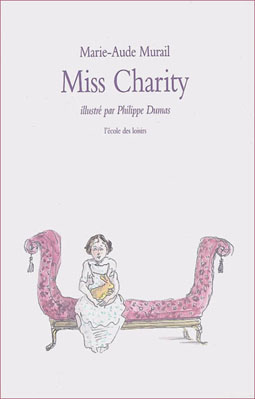

Miss Charity par Marie-Aude Murail. L’histoire se déroule dans la fin du 19ème siècle. Miss Charity Tiddler est une petite fille solitaire. Depuis l'enfance, elle s'intéressé par la nature, spécialement les animaux. Elle passe son temps dans le troisième étage de sa maison en compagnie de Tabitha, sa bonne, et ses animaux de compagnie. Charity est très intelligente et apprend par cœur les pièces de Shakespeare. Sa plus grande passion c'est le dessin. De chapitre en chapitre, Charity grandit. Elle est perdue dans les rigueur de la bonne société anglaise. Au 25, la société pense qu’elle est trop vieille pour trouver un mari.  Mais Tiddler n'est pas trop inquiet parce qu'elle veut être indépendante, et écrire de livre jeunesse.

J’ai compris peut-être 50 pour cent de ce livre. Je pense que c’est bon parce que c’est un livre très long (563 pages !). Mais, donc, je ne suis pas la meilleure personne pour écrire une critique sur le livre. Je vais écrire basé sur que j’ai compris. Parce que c’est un bon exercice pour mon français. Je m’excuse pour les erreurs.

Saturday, 2 August 2014

Tess of the d'Urbervilles by Thomas Hardy

“If an offense come out of the truth, better is it that the offense comes than that the truth be concealed.”  - Tess of the d’Urbervilles

Tess of the d’Urbervilles by Thomas Hardy is set in a small country town in Wessex, at the end of the 19th Century. The Durbeyfields discover they are the descendants of a forgotten noble family – the d’Urbervilles. When the family experiences financial hardship they send their eldest daughter to ask for help from their “kin” (a family that bought the name of d’Urberville). Tess meets Alec d’Urberville her (fake) cousin. While Tess is working for Alec’s mother, he rapes her. The rest of the story is about the struggles Tess faces as a victim of rape in a society that blamed her for her own predicament. Even her mother blamed her for not marrying Alec.

Is this a good book? Yes and no. I didn’t like it; in fact I quite detested it. I didn’t like the ending of the story and I certainly didn’t like the characters, not even Tess. However, if Hardy’s purpose in writing was to draw emotions, even if they are negative, if his purpose was to start a debate on feminist issues then he did a good job with his book. Personally, I like the idea of books as escapism and of stories with happy endings. I did not achieve this with Tess of d’Urbervilles, but I did go on an emotional roller coaster ride as I had heated discussions with all of the characters at one point or another.

Monday, 17 March 2014

The Girl in the Steel Corset (#1 The Steampunk Chronicles) by Kady Cross

"No person was entirely good or entirely evil- one side could not exist without the other." Chapter 7

The Girl in the Steel Corset is about a 16 year old girl, Finley Jayne, with a mysterious side to her. Set in 1897, being different wasn't generally accepted in society. Finley has a 'thing' inside of her, something that gives her strength and aggression when she is in danger. Soon, she finds other people each with their own power. Together they try to find 'The Machinist' - the mastermind behind several crimes. All of his crimes seem to be random and  unconnected to each other, but there's one similarity- all of the crimes are done by automatons. And they aren't as random as they seem... all the small crimes are leading into something huge and catastrophic. 

When I first saw the cover book, I already thought it was the style of book I'd enjoy. I know... you shouldn't judge a book by its cover, but my assumptions of the book were mostly correct. At first glance, I predicted it would be both historical and romantic. After flipping to the first page, I saw that my first guess was right- it was set in the past. 

Friday, 17 January 2014

Little Dorrit by Charles Dickens


“You will profit by failure, and will avoid it another time. I have done a similar thing myself, in construction, often. Every failure teaches a man something, if he will learn.”


Little Dorrit by Charles Dickens is the tale of the intertwining lives of 19th Century British families, from different social and economic statuses. Little Dorrit was born and raised in the Marshalsea debtors’ prison. She meets Mr. Clennam, who had just returned from his travels abroad, after his father died and left a mysterious watch for Mrs. Clennam. After seeing his mother being unusually nice to Little Dorrit he begins to suspect that his mother, the watch and Little Dorrit are all connected. He also suspects that his mother had taken some part in the financial state of the Dorrits. Mr. Clennam, with the help of friends and high powered connections investigate this case. What we find out in the end is a bigger twist to the story than Mr. Clennam ever suspected when he began to investigate.

Like many 19th Century, English classics, Little Dorrit is a humongous text that explores the unfair working of society, the gap in the upper and lower classes and especially, the obsession people have with money. I found this book was sometimes very confusing and at other times very intriguing. The start was very long and it only became to be interesting only a third of the way in, mostly because it was when I started to understand the story – others more proficient in classic literature may completely disagree with me. What I found the hardest to follow were all the jumps from each family every few chapters. However, I didn’t worry about this too much because I had already learnt from Les Miserables by Victor Hugo, which followed the same style. And as expected, the confusion all pays off when all the characters come together to form part of just one story.
Warning: This is a somewhat lengthy review  of the ideas on the book and it contains  some spoilers.

Thursday, 17 October 2013

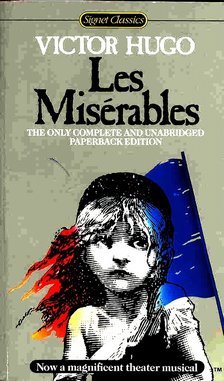
Les Misérables by Victor Hugo


“If the soul is left in darkness, sins will be committed. The guilty one is not he who commits the sin, but the one who causes the darkness. " - [Monseigneur Bienvenue] Les Misérables.


Les Misérables by Victor Hugo is the story, set in the 19th Century, of the intertwining lives of Jean Valjean, Fantine, The Theodores, Javert, Cosette and Marius Pontmercy. Jean Valjean was a convict, released after 19 years in prison. He goes from a distraught, dark and even malicious man to a "saint". He grows to become very successful and a respected man in his new town. That is, until Javert (a police agent) discovers the truth and Jean Valjean must escape. The others are characters that he meets later on that affect his actions and attitudes. 

This book was amazing!!! Don't get me wrong,I struggled a lot at the start and it took me months to read the book, but it was all worth it! Because the stories all intertwine at the end, it is only at the end of each chapter and especially at the end of the book that the story seems to be making complete sense and it is at such moments that the book becomes so gripping. Victor Hugo did a fantastic job exploring the darkest parts of society and while it seemed dry at some parts, it all joined up to create a very well written and intriguing book. It is one of those times that you have to step away to see the whole picture. I have to admit, the language was quite hard at times and I did not understand everything and I'm sure I missed important ideas Hugo wrote. I will definitely revisit this book in a few years to get even more from it...

Saturday, 27 April 2013

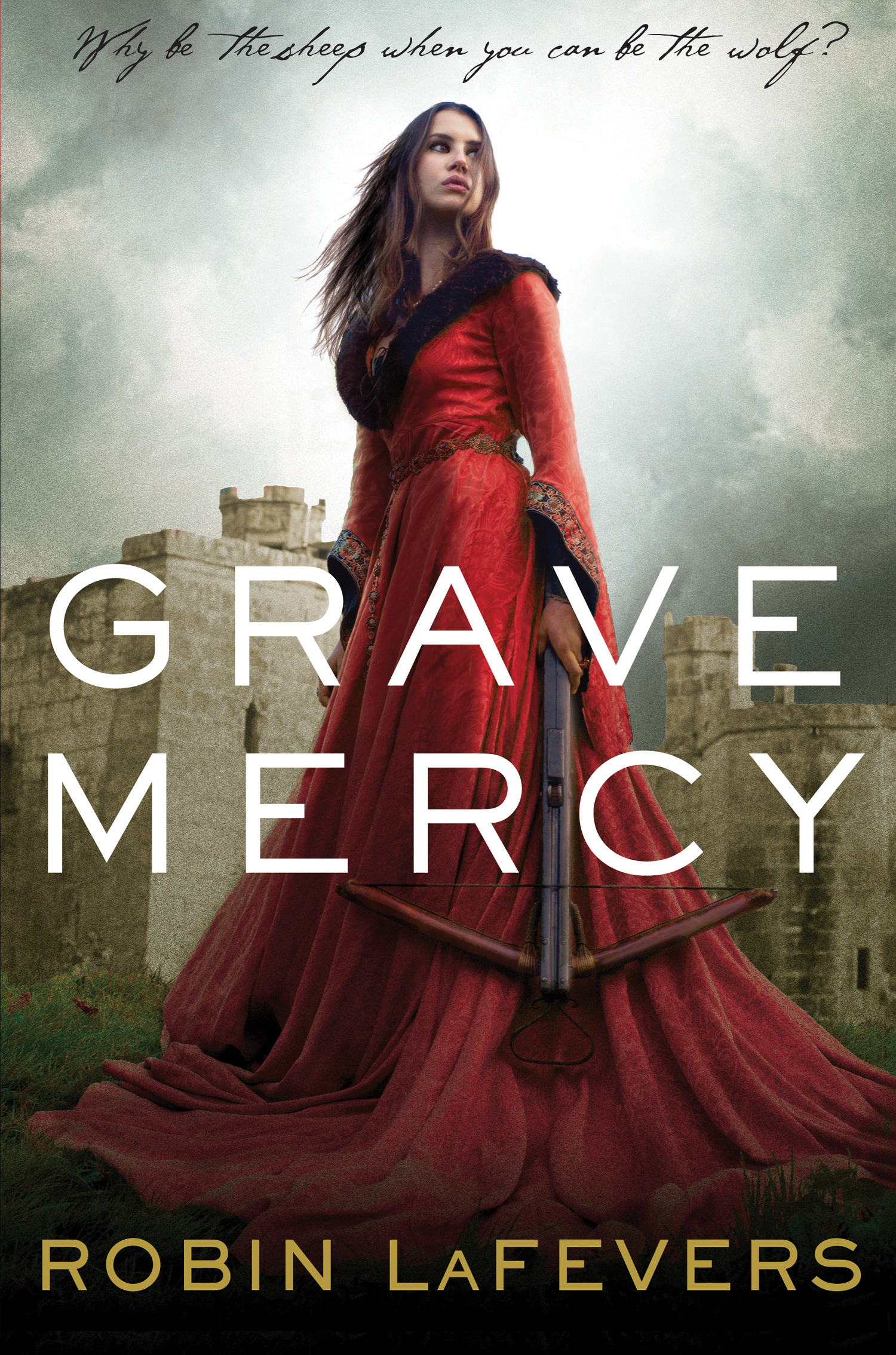
Grave Mercy by Robin LaFevers

“Why be the sheep when you can be the wolf?”  - Grave Mercy


Grave Mercy by Robin LaFevers is the first book in His Fair Assassin series. After escaping the brutalities of her father and her newly wed husband she is sent to a convent.There Isame learns that she is a daughter of death, just like the other girls of the convent of St. Mortain. She has been assigned a duty to kill those with a 'marque', to bring justice into the world. Ismae learns all the ways to kills a man and is ready for where her duties will take her. She has sworn loyalty to her God and convent to do their bidding. However,  everything is shaken when she starts falling in love with the man she is supposed to snoop and potentially kill. Also, she is starts to realise that maybe the convent can make mistakes.

To start off I have to say that this book is an older youth fiction; it is suitable to girls in their 20s. At the start I was a bit discouraged and thought that this book would be inappropriate for someone in their mid-teens. However, the book shifts in their focus, away from the villainy and brutality towards more of a mystery and romance novel. 

Although this book is all about an assassin, I think it can relate a lot to real life. The theme/idea that stayed with me through this book is one that I have always debated; the relationship between believing in religion and believing in the religion's faith.

Friday, 26 April 2013

Haunting Violet by Alyxandra Harvey


“Tucking my nose into a book makes me completely oblivious to my surroundings. I would have made a terrible spy in the army--the first person to hand me a novel would have been able to shoot my head clean off without me noticing.”  - Haunting Violet


Haunting Violet by Alyxandra Harvey is the story of Violet and her new abilities to see the dead in the midst of 19th century society. Her mother was a fake spiritualist with a great desire and ambition to join the rich and live in luxury. Violet must obey her mother and follow her schemes however everything changes when Violet finds that an assassinated young girl wants her to solve a real ghost mystery. 

I quite enjoyed reading the book and I found myself pondering if real life spiritualists really do exist. I'm sure many are like Violet's mother, lying and deceiving just for fame and money. However, the world has such a numerous population, I really do think that maybe at least one person actually has this ability to see and talk to the dead. 

While reading this book I realise I would have really liked to be able to go to the past an spend some time in that era; in the richer side of the population, of course. All the dresses, no matter how uncomfortable thy are described as, hold some appeal to me. I realise how girls were treated as having to be all polite and obedient and that the thoughts there were very much sexist but I would like to spend just a week in that time so I can wear those clothes and live in such grandeur and splendour, with so many people to take care of you. 

Spoilers Below!!!

Friday, 19 April 2013

Persuasion by Jane Austen


“How quick come the reasons for approving what we like.”  - Jane Austen,


Persuasion by Jane Austen is the story of Anne Elliot; a witty, independent and intelligent woman of the upper class in the 19th Century. Eight years before the start of the novel, Anne was still a young woman when she fell in love with Officer Frederick Wentworth. However, she was persuaded against this love. Now, in the present she is already 27 and much wiser. She meets again with now, Captain Frederick. This is not only their love story but also the satire of society’s vanity and social class.

At the start I found the book quite hard, I thought that I would actually be writing this review differently and saying that I didn't think this was a book for my level and age, mid-teens. The words were quite hard, like any other classic and the names sometimes got me confused, especially the two Charles and it didn't help they were cousins. However, once the story started taking shape the whole thing became easier to read and follow. 

I quite enjoyed this book, but I do have one comment that to me seems to correlate with Jane Austen’s literary work; I find that Austen writes books that if they were written nowadays they would have been considered ‘teen fiction’ with a bit of romance. It may be because I am used to the thrill of fantasy novels but I found that Persuasion didn’t have a very strong plot. As I said, I enjoyed reading the novel however, as I go over the story I don’t know how the story took over so many pages. It was basically the day to day life of Anne Elliot and her seeing Captain Wentworth again. There were little complications, like there would be in real life but nothing major. I read in the trusty J sparknotes that the climax was when Wentworth gave Anne the letter announcing that he still loved her.  However, this scene was one of the last in the books, were all the other 150 or 200 pages just the introduction and a very small build-up?

Saturday, 6 April 2013

Frankenstein by Mary Shelley


“Beware; for I am fearless, and therefore powerful.”  - From the novel, Frankenstein


Frankenstein by Mary Shelley is Gothic genre book written in the 1818. Victor Frankenstein is an university student whose ambitions and passion for the science leads him to create something no one has ever deemed possible, he created life using dead humans' body parts. However, as soon as he finishes his project he realises the mistake.To him, the monster is vile and gruesome. The story is told through the letters of Captain Robert Walton, who found Frankenstein nearly at a state of emaciation. His letter not only incorporates Victor's story telling but Victor's own letter and even the monster's side of the story as he tells it to Victor who then tells it to Walton. 

How do I begin..

The novel was completely different to what I imagined and it gets me so frustrated that the movies are so different to the book. I don't think Mary Shelley would have been too happy with the movies made of Frankenstein  not only because they are so different but because they lose the themes and morals. There are various movies that came out on Frankenstein but most of them have the Creature as some sort of complete monster who can't talk at all other than grunts. In the book Frankenstein was so eloquent and always gave an explanation as to why he became the way he was. In one of the movies the Monster was bad tempered was because the brain used was a criminal's brain, however in the book the Monster killed people because of the injustice that he suffered because of his appearance. Also, they even changed the name of Victor Frankenstein to Henry and made the character lose the feeling of isolation. In one of the movies there are sequels (eg. Frankenstein's Bride) but in the book Frankenstein died... I mean, I know movies are usually a bit different to books so that it flows more and scenes are changed so that emotions and reasoning are depicted visually rather than worded out but this is just ridiculous.  

Thursday, 4 April 2013

The Case Book of Sherlock Holmes by Sir Arthur Conan Doyle

'You see, but you do not observe. The distinction is clear.'

Sherlock Holmes is a series of mystery and crime fiction books. Holmes is a consulting detective and Watson is his sidekick. Together, they solve crimes. Sherlock Holmes has a very strange personality. He is very intelligent and observant but isn't empathetic and usually doesn't say what his thoughts are about the crime only when he has solved everything.

Saturday, 16 March 2013

Jane Eyre by Charlotte Brontë


“The soul, fortunately, has an interpreter - often an unconscious but still a faithful interpreter - in the eye.” 

Jane Eyre by Charlotte Brontë is a gothic romance novel that has become a classic. It is the story of Jane Eyre a strong, fierce, passionate, educated, god-righteous woman as seen by her eyes. Jane was an orphan, she was sent to a boarding school for the destitute when she was 10 by her neglecting aunt. There, she received quite a good education and found a teacher that really inspired her. Jane always wanted to travel and discover the world so after completing her schooling and teaching there for two years, she becomes a governess to a rich family with a mysterious master. The story is her struggle in finding the balance between the morally right thing and her own passions, between being obedient but independent and free-willed. Jane critiques the social class division however sticks to it and believes in it all through her life.

Charlotte Brontë made my thoughts on old novels change. Through Jane Eyre I found that there can be classic that I become absolutely enthralled. Sure, it still had some of the conventional language found in older and gothic books: long paragraphs describing something that appears to be insignificant (I’ll confess that sometimes I end up skipping a line or two when it is too descriptive) and the complete opposite, when a scene changes without notice that you are left to wonder what is going on.

I think that Brontë used Jane Eyre to explore concepts of social hierarchy and if status and behaviour is innate. However, she did not use the protagonist to challenge these concepts but rather, through her writing, gave the readers a ‘challenge’ to ponder for themselves in this issue. Jane Eyre was a strong, independent woman however she never saw herself as an equal.